https://www.ctfplus.cn/problem-detail/2059190642604511232/description
DTMF
听一下radio.wav听出来是拨号音
旧时代电话系统的声音:DTMF 电话拨号音
DTMF是传统电话系统使用的拨号信号,每个按键由两个固定频率的正弦波叠加组成。也就是按一个键=一个低频+一个高频同时响
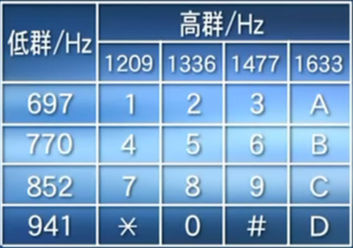
比如按5=770Hz+1336Hz两个正弦波叠在一起
解码 DTMF 有两种方式:
|
|
|
| 方法 |
原理 |
优劣 |
| Goertzel 算法 |
对 8 个目标频率逐个算能量 |
只算需要的频率,O(N),快 |
| FFT |
全频谱扫描 |
算一堆不需要的频率,O(N log N) |
因为 DTMF 只有固定的 8 个频率,Goertzel 更合适。窗口大小一般取 40ms(DTMF 标准规定每个音至少持续 40ms),步长 20ms(50% 重叠防止错过边界)。
当然,不想手写 Goertzel 的话直接用在线工具也行:
使用在线网站:https://dtmf.netlify.app/
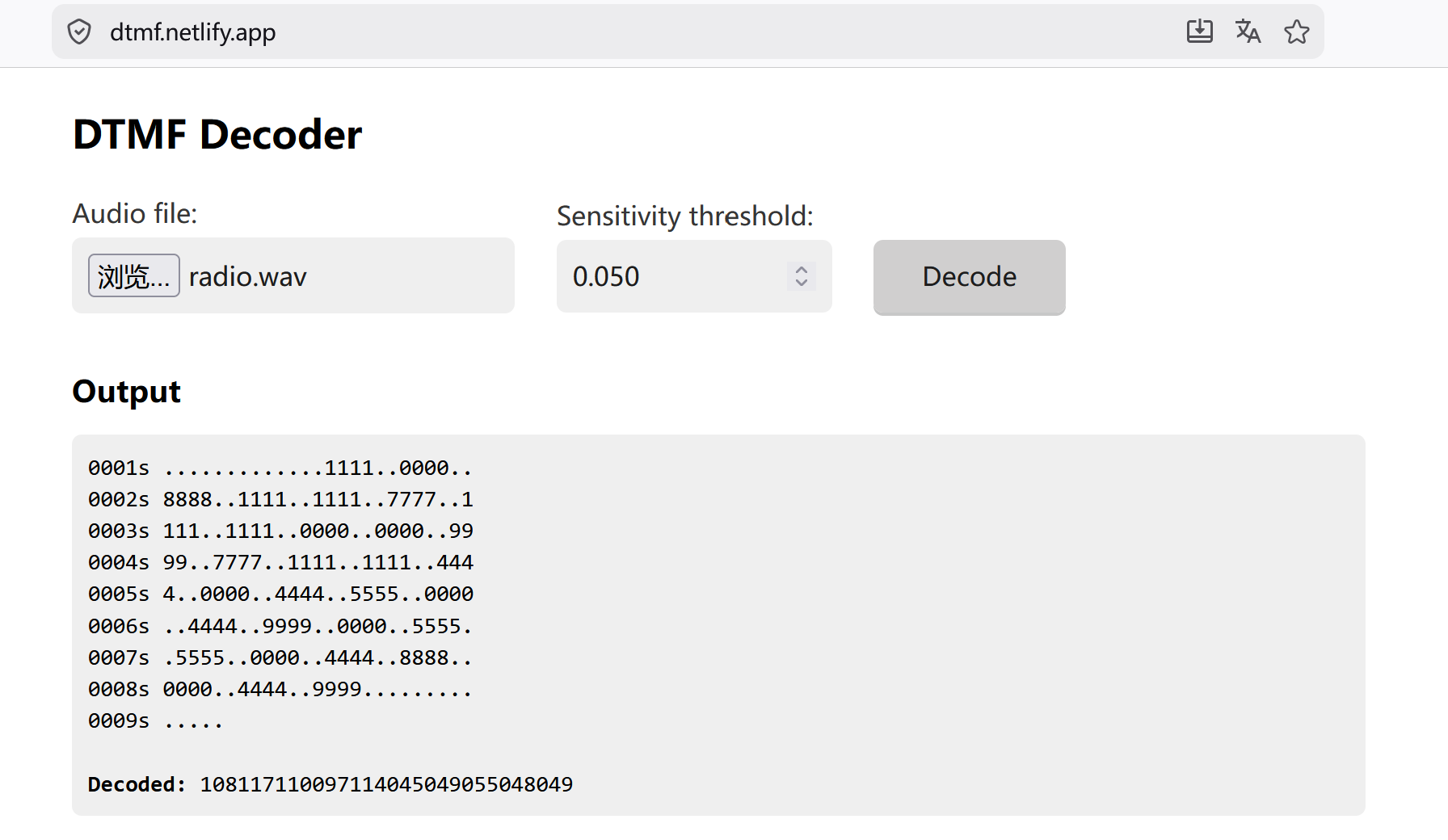
1
| 108117110097114045049055048049
|
一个容易被忽略的坑:音频里连续两个按键(比如说两个1),中间的间隙只有60ms,探测器可能把它们合并成一个420ms的长音。需要额外逻辑:超过250ms的连续监测强制拆分。不然会得到25个数字而非30个
30 位刚好被 3 整除 全部落在 ASCII 可打印范围(32-126)
1
2
3
4
5
6
| digits = "108117110097114045049055048049"
password = ""
for i in range(0, len(digits), 3):
decimal = int(digits[i:i+3])
password += chr(decimal)
print(password)
|
SHA-256 密钥派生(KDF)
A 留下的公式。密钥派生函数:
1
| key = sha256("ZeroG::" + radio_password + "::www.pwnstars.online")
|
拆开看:**前缀::密码::域名**,用 **::** 当分隔符。
SHA-256 输出固定 32 字节(256 位),正好当对称密钥用。
出题人只给了这一个公式,全文没出现过 “AES” 三个字。因此加密层大概率也只用 SHA-256 构建,不是标准分组密码。
telemetry.dat文件结构
1
2
3
4
5
| telemetry.dat 结构 (411 bytes):
┌──────────────┬──────────────┬─────────────────────────┐
│ Magic (8B) │ Nonce (8B) │ Ciphertext (395B) │
│ ZGTELv2\n │ ZGRMOON2 │ [SHA256-CTR encrypted] │
└──────────────┴──────────────┴─────────────────────────┘
|
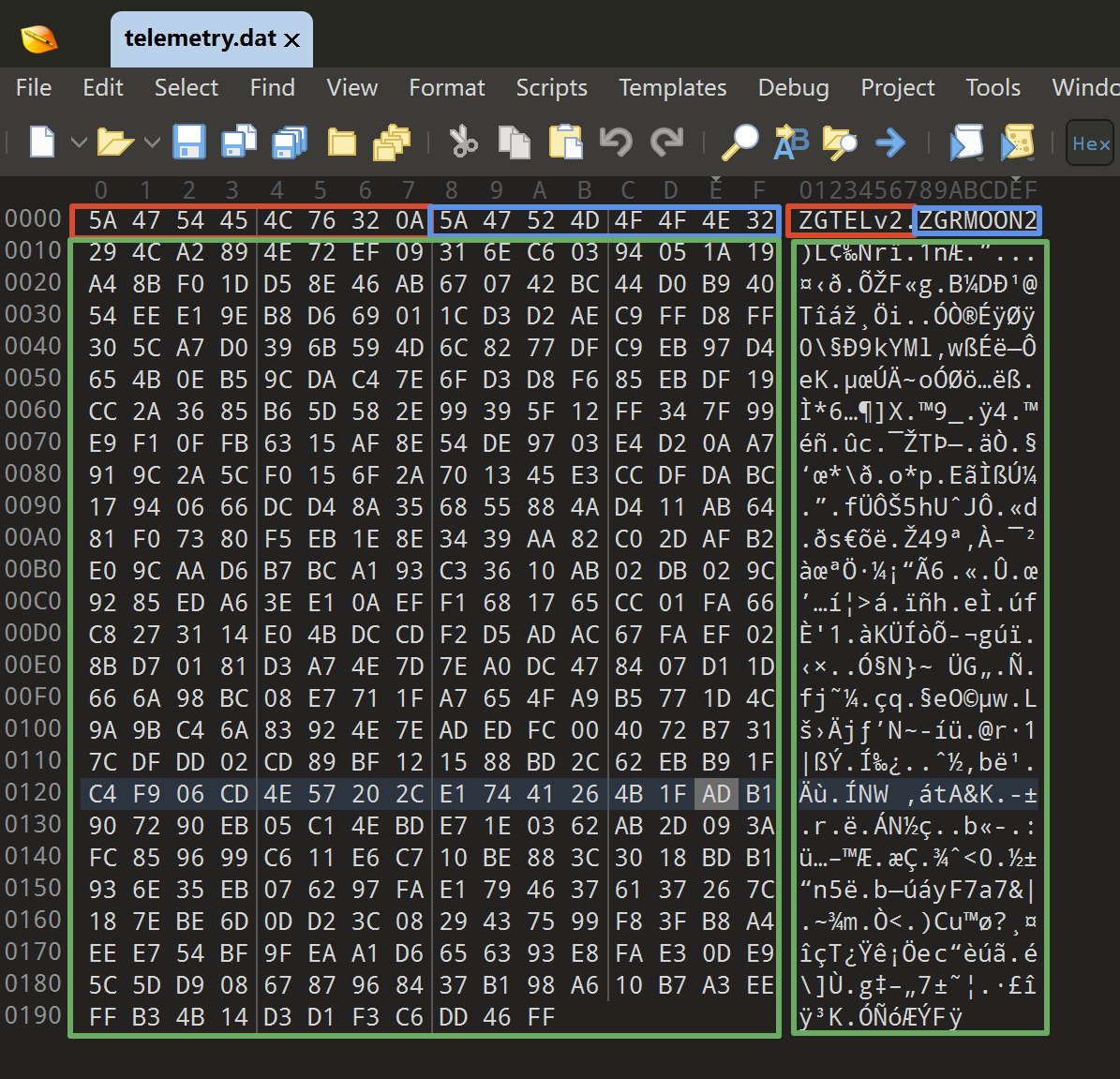
前 16 字节是可读ASCII 后面都是乱码 这是典型结构:明文头(16 字节)+加密体
0A是\n 往往表示第一段结束 拆成 8+8 的形式
加密算法:xorstream-sha256-ctr
README里 A 的公式
1
| key = sha256("ZeroG::lunar-1701::www.pwnstars.online")
|
此处应该为SHA256(密钥 + 某个变化的值) = 32 字节随机数。
这个随机数 XOR 数据 = 加密
也就是用哈希函数当随机数生成器
接下来把各种组合都跑一遍
类似于这样
1
2
3
4
5
6
| keystream = SHA256(key + nonce + counter_0)
+ SHA256(key + nonce + counter_1)
+ SHA256(key + nonce + counter_2)
+ ...
plaintext = ciphertext XOR keystream
|
1
2
3
4
5
6
7
8
9
10
11
12
13
14
15
16
17
18
19
20
21
| # 猜 nonce 在哪?试试:
SHA256(key + 文件头最后8字节 + counter) # nonce 取ZGRMOON2
SHA256(key + 文件头全部16字节 + counter) # nonce 取全部
SHA256(key + counter) # 不用 nonce
# 猜 nonce 和 counter 谁在前?
SHA256(key + nonce + counter)
SHA256(key + counter + nonce)
# 猜 counter 是几字节?字节序?
counter.to_bytes(4, 'big') # 4字节大端
counter.to_bytes(4, 'little') # 4字节小端
counter.to_bytes(8, 'big') # 8字节大端
# 猜 counter 是几字节?字节序?
counter.to_bytes(4, 'big') # 4字节大端
counter.to_bytes(4, 'little') # 4字节小端
counter.to_bytes(8, 'big') # 8字节大端
排列组合跑一遍,哪一个出可读英文就是哪一个。最终命中:
SHA256(key + ZGRMOON2 + counter_4字节大端)
|
解密后的结果
1
2
3
4
5
6
7
8
9
10
11
12
13
14
| ZeroG Moonlight Telemetry Frame
Lab : Pwnstars
Crew : N1 / A / Hugo / Gnaw / Fen
Home : www.pwnstars.online
Channel : Moonlight Radio
Cipher : xorstream-sha256-ctr
KDF : sha256("ZeroG::" + radio_password + "::www.pwnstars.online")
Message:
DTMF is not encryption.
It is only a way to send symbols through sound.
FINAL=c3ludHtNcmViVF96YmJheXZ0dWdfZW5xdmJfcWd6c30=
|
1
| FINAL=c3ludHtNcmViVF96YmJheXZ0dWdfZW5xdmJfcWd6c30=
|
先base64再ROT13即可
Base64解码获得
1
| synt{MrebT_zbbayvtug_enqvb_qgzs}
|
ROT13获得
1
| flag{ZeroG_moonlight_radio_dtmf}
|
exp
1
2
3
4
5
6
7
8
9
10
11
12
13
14
15
16
17
18
19
20
21
22
23
24
25
26
27
28
29
30
31
32
33
34
35
36
| import hashlib, re, base64, struct
# ===== Step 1: DTMF → password =====
digits = "108117110097114045049055048049"
radio_password = ''.join(chr(int(digits[i:i+3])) for i in range(0, len(digits), 3))
print(f"[1] radio_password = {radio_password}")
# ===== Step 2: Read file =====
with open("telemetry.dat", "rb") as f:
data = f.read()
magic = data[:8] # b"ZGTELv2\n"
nonce = data[8:16] # b"ZGRMOON2"
ciphertext = data[16:]
# ===== Step 3: Key Derivation =====
key_material = f"ZeroG::{radio_password}::www.pwnstars.online"
key = hashlib.sha256(key_material.encode()).digest()
# ===== Step 4: SHA256-CTR Decrypt =====
stream = b""
counter = 0
while len(stream) < len(ciphertext):
counter_bytes = counter.to_bytes(4, "big")
stream += hashlib.sha256(key + nonce + counter_bytes).digest()
counter += 1
plaintext = bytes(c ^ s for c, s in zip(ciphertext, stream))
text = plaintext.decode()
print(f"[4] Decrypted:\n{text}")
# ===== Step 5: Extract Flag =====
match = re.search(r"FINAL=([A-Za-z0-9+/=]+)", text)
b64 = base64.b64decode(match.group(1)).decode()
flag = __import__('codecs').decode(b64, 'rot13')
print(f"[5] Flag: {flag}")
|